Occasion-Based Segmentation for Food Product Line Extensions
Brands should build food extensions around when consumers eat, not just new flavors.
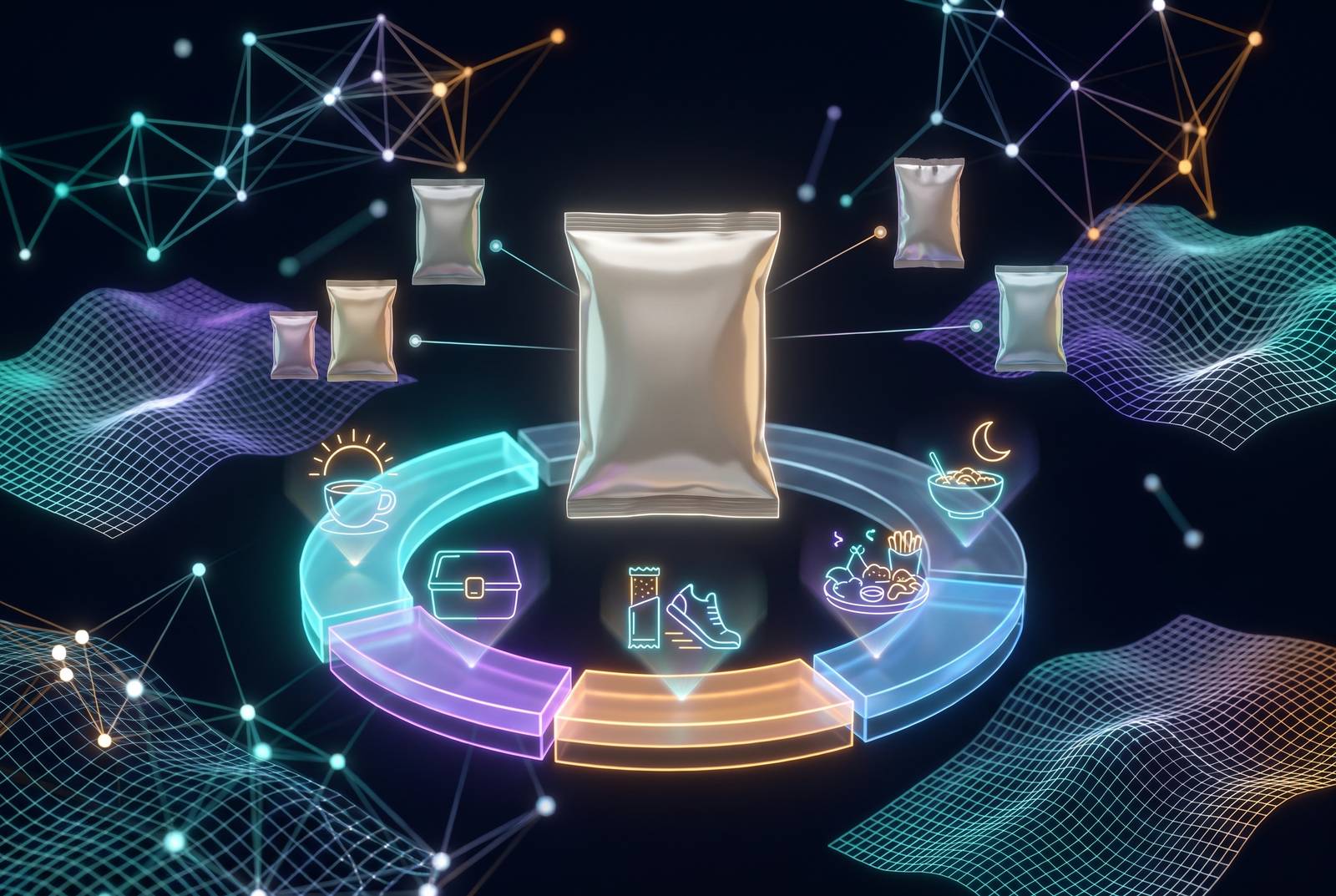
Food line extensions work best when they give people a new reason to eat. Occasion-based segmentation starts with when and why consumers eat, then builds the product around that moment. The discipline is to find an unmet occasion the brand can credibly serve, validate it, and test whether the extension adds business after accounting for sales shifted away from the core product.
Why food line extensions fail when flavor is the organizing principle
Oreo is recognised by roughly 96% of consumers, yet only roughly one in five names it as their preferred brand. KitKat has a similar gap between near-universal recognition and preference. Being known is not the same as being chosen. Another flavor adds a choice whose ability to close that gap by giving consumers a stronger reason to choose the brand remains uncertain.
That is the weakness of flavor-led extension by default. A brand can keep filling shelves without doing much to bring buyers back or deliver more of what it promises. Dilution starts when the extension moves beyond what consumers believe the brand does well, or when the pursuit of novelty weakens the original product. Using variety as a substitute for strategy creates that risk.
Lehmann-Zschunke & Siegmund-Schultze’s July 2025 study in the Journal of Brand Management gives that risk commercial weight. The study found that a higher extension level, which meant more product attributes varied across the line, hurt revenue for both high-priced and low-priced brands. The effect was stronger for high-priced brands, with consumers becoming overwhelmed by the choices.
What occasion-based segmentation actually means and how it differs from flavor or format segmentation
Occasion-based segmentation organizes demand around when and why people eat. It includes the setting, the need and the people involved. Flavor segmentation asks which variety consumers want, while occasion segmentation asks what their moment requires. The starting point changes the development brief. A preference for a flavor says little about whether someone needs fuel, a reward or something to share.
Format segmentation gets closer to when and why people eat, but still starts with the product. Single-serve, multipack and resealable are possible answers to demand. An occasion starts with who is eating, whether alone, socially or with family. It also specifies when they eat, why they eat and what other foods or behaviors surround the moment.
Brand Finance identifies four characteristics of a strong extension, namely credibility, a growing need, retained core brand assets and the potential to become a growth platform. Lindt’s Dubai Style Chocolate illustrates the distinction by drawing on a social media trend while staying true to Lindt’s premium positioning, then expanding into a wider range of formats.
Why the structural shift in how consumers eat is making occasion mapping more urgent now
More than two in five Gen Z and Millennial consumers replace meals with snacks at least once a day. Eating this way cuts across the breakfast, lunch and dinner pattern that many food portfolios were built around. A snack may be doing the work of a meal, which changes the requirements a product must meet. Busy families and on-the-go consumers add further demand for food suited to specific situations.
Tastewise identified the afternoon occasion as an unmet opportunity in functional snacking in May 2026, with shelf options still dominated by sugar-forward formats. The occasion exists, but the available offer does not fully answer it. Demand in fast-growing categories including functional snacks, fermented beverages and plant-based protein also reflects motivations such as energy, gut health and protein. Occasion mapping connects those needs to the moments when consumers act on them.
PwC’s CPG Outlook 2026 adds a distribution consequence to this shift. The outlook describes AI agents that compare products across brands and retailers, weigh price and what is in stock, and make purchases automatically. It argues that winning CPGs must design AI-readable, occasion-based bundles that agents can discover, recommend and reorder. Whether agents already evaluate occasion fit remains unproven by that design imperative. This means brands need to make clear what the product is for beyond the pack and the shelf.
How to map occasions that are genuinely unmet versus occasions already claimed by competitors
The work starts with how people use the brand outside the settings it expects. Occasion mapping looks for the times, pairings and needs appearing in social, search, menu and recipe data. Category labels are too blunt for this work. They describe where a product sits, but not necessarily the job consumers give it. The useful signal is a recognizable eating moment with requirements that current products may not meet.
These sources can show how people eat now as well as what they might want in the future. But evidence of an occasion is not evidence of an opening. A moment that looks attractive may already have a strong offer serving it. Egglife Foods’ Grab & Go egg white wraps, for example, address a quick, high-protein meal or snack for health-conscious consumers on the move.
The mapping task is therefore to distinguish an unmet requirement from an occasion already claimed by a competitor. That means considering what consumers already reach for as well as whether they express the need. Brand credibility is the next filter. A team should establish whether consumers can plausibly see its brand serving the moment before treating it as a development opportunity. A real need can still be the wrong opportunity for a particular brand.
Validating an occasion hypothesis before committing to development resources
Trend signals establish a hypothesis. They can show where demand is heading without proving that consumers will accept a specific brand or change their behavior to adopt its product. Context is the difficult part of validation. Asking someone in July how they will host in December, or to imagine stress-eating in a month when inflation is high, relies on what they say they would choose while outside the moment itself.
It can take months to run traditional focus groups, in-home usage tests and shelf simulations. Synthetic consumer panels offer a faster way to compare concepts by changing assumptions about the occasion, including the holiday setting, the state of the economy and which competing products are on offer. They can narrow the field before costly development begins. But their responses are modeled. Digital twins built from interviews are stronger on deliberate decisions than on the impulsive choices that account for a large share of packaged goods purchases.
The emerging two-phase approach uses synthetic panels first to narrow a broad option set quickly and cheaply. AI-moderated conversations with real customers then test how people respond to the concepts that remain. Real customers show how people behave in ways the model cannot replace. The design fits the wider research position, in which a large majority use AI somewhere in their workflow but very few trust AI-generated participants alone for decisions of this weight.
What the product specification looks like when it starts from an occasion rather than a formula tweak
An occasion-led brief describes what the product must accomplish before it specifies a recipe. For an afternoon energy dip, the requirement is energy without the crash, in a portable, portion-controlled product that needs no preparation. A new flavor cannot compensate for a format that fails the moment. The occasion determines the function, the claims and the form together.
Aldi Süd’s Chefs’ Cupboard Slow Cooker Recipe Base Products make that connection tangible. The range includes Classic Beef Casserole, Garlic & Rosemary Lamb Shank and Massaman Beef Curry. The underlying occasion is dinner for busy families. The need is to speed up cooking without sacrificing a home-cooked feel, so the recipe base responds to a practical task rather than simply offering another seasoning variation.
Different is not a sufficient product requirement. At specification stage, the team should apply the Brand Finance criteria to the actual proposal, testing its credibility, the growth of the need, its protection of core brand assets and its potential beyond one launch. A promising occasion still needs a product that fits the brand.
How to test whether an extension creates a new consumption moment or simply cannibalizes the existing one
An extension’s sales do not establish that it has grown the business. Consumers may simply have switched from the core product to the new one for the same occasion. The commercial test is what the extension adds. It must recruit consumption moments that would not have occurred with the core product, rather than take credit for demand the brand already served.
The Lehmann-Zschunke & Siegmund-Schultze study flags cannibalization of the parent brand’s sales as a central risk. It found that increasing the number of extension products produced a significant positive revenue increase only for low-priced brands. More products cannot be treated as proof of more growth, and this finding does not mean every premium extension cannibalizes sales. Premium brands need proof that people use the extension in ways they do not already use the core product.
At concept stage, the team should be able to state in one sentence who the extension serves, when, why and with what else, and explain why the core product does not serve that occasion. If that sentence is vague, it is too soon to test the concept. Synthetic panels can then compare the core product and extension within the same scenario, testing whether respondents see complements or substitutes. The result provides an early warning.
After launch, the diagnostic combines added revenue with familiarity, consideration and preference for the core product. Those brand measures should stay the same or rise. If preference falls as extensions grow in number, the brand may be using up its equity. The same scrutiny exposes extensions used to distract from shrinking packs, reformulation or price increases, because a new name does not establish a new occasion. Occasion framing makes the claimed reason for the launch testable.
Why occasion-based extensions require continuous research rather than a one-time launch study
An occasion is not a permanent consumer trait. Routines, economic conditions and cultural contexts change, so a product built around a fixed snapshot can lose its fit. A study at launch alone cannot keep track of those changes. Direct-to-consumer channels let firms see what people buy, what they prefer and what new needs they have, so it is easier to keep track over time. That access supports a live view of behavior rather than repeated reliance on retrospective surveys and focus groups.
For food brands, the research rhythm should follow the pace of the decisions. Monthly or ongoing research suits new product launches and major price changes, quarterly tracking suits active categories, and an annual deep segmentation refresh revisits the broader picture. Occasion research needs the same rhythm. Rather than commission an isolated study for every extension, brands can build a foundational behavioral model and keep testing new hypotheses against it. The model’s initial assumptions must remain open to revision.
That approach changes portfolio planning as well as launch decisions. Each validated extension has a distinct moment to serve, and the full range can be audited against the occasions the brand has earned the right to enter. Overlap between different flavors or packs becomes a question to investigate. Innova named occasion-based innovation a Top Ten Trend of 2026, which reflects a wider change in how brands plan products. Brands gain a lasting edge when they keep the occasion map up to date enough to guide the next extension as well as explain why they launched the last one.